


How to engage rock fans: elevate experiences with authenticity
- Travis B
- Apr 27
- 9 min read

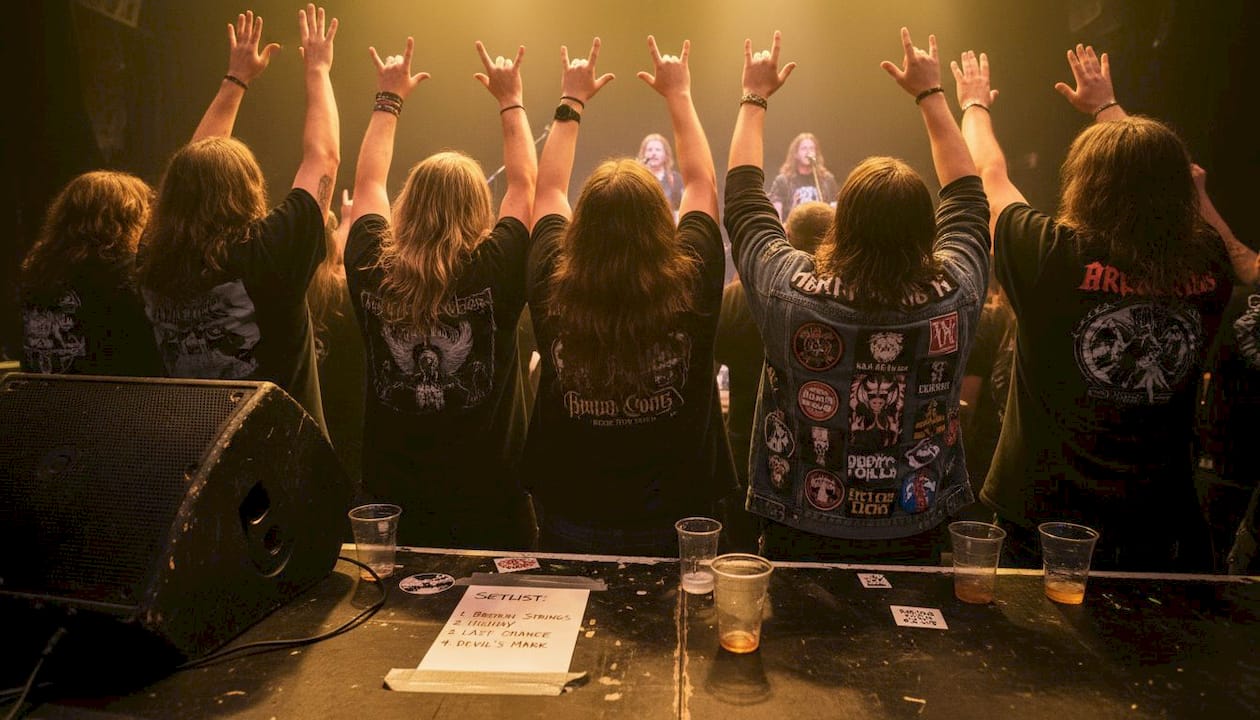
Rock and metal fans are not a casual audience. They feel everything deeply, they remember every slight, and they can tell within seconds when someone is faking it. If you’ve ever watched a crowd turn cold on a band mid-set because something felt off, you know exactly what we mean. The frustration is real, both for fans who feel let down and for bands trying to connect without the roadmap to do it right. This guide is built from experience, from years of playing stages across Kentucky and beyond, from real conversations with real fans who wanted more than just a show.
Table of Contents
Key Takeaways
Point | Details |
Authenticity drives loyalty | Rock fans respond best to genuine, consistent narratives and avoid inauthentic gestures. |
Emotional stories connect | Personal storytelling and shared rituals deepen engagement and create lasting bonds. |
Innovative formats matter | Embracing new media channels and fan-driven platforms fosters participation and excitement. |
Measure and refine | Ongoing impact verification and feedback loops ensure sustainable engagement over time. |
Understanding the mindset of rock and metal fans
Rock and metal fans carry something inside them that most people don’t fully understand unless they’ve lived it. This music isn’t background noise. It’s how a lot of people process the hardest moments of their lives, get through grief, work through anger, and feel less alone in rooms full of strangers. That’s not an exaggeration. The emotional benefits for fans of heavy music run deep, touching on mental health, identity, and community in ways that other genres rarely match.
The numbers back this up in a serious way. Metal statistics show that heavy metal fans are the most loyal on Spotify, with 70% of listeners using the music specifically for stress relief and 45% using it to manage depression. The community that forms around this music has even been linked to reducing suicide risk among vulnerable listeners. That’s not just music fandom. That’s a lifeline for a lot of people.
What this means practically is that when fans choose your band, they’re not just picking a playlist. They’re making a statement about who they are. They’re inviting your music into the most private and painful corners of their lives. That’s a kind of trust that demands respect and real reciprocity from artists.
Here’s what makes rock and metal fans tick:
Loyalty rooted in identity. Fans don’t just like the music. They see it as part of who they are.
Emotional catharsis as the primary draw. The release of heavy music is functional, not just recreational.
Community as a survival mechanism. Metal shows, forums, and fan spaces often serve as genuine support networks.
Suspicion of inauthenticity. Fans have sharp radar for anything that feels manufactured or pandering.
Individual experience even in crowds. Many fans experience shows in a deeply personal way, even surrounded by thousands.
“Heavy metal is not just music. It’s a community, a philosophy, and for many, a way of surviving the world.”
The sound history emotional power of this genre goes back decades, and fans carry that history with them. They know when a band honors it and when a band exploits it.
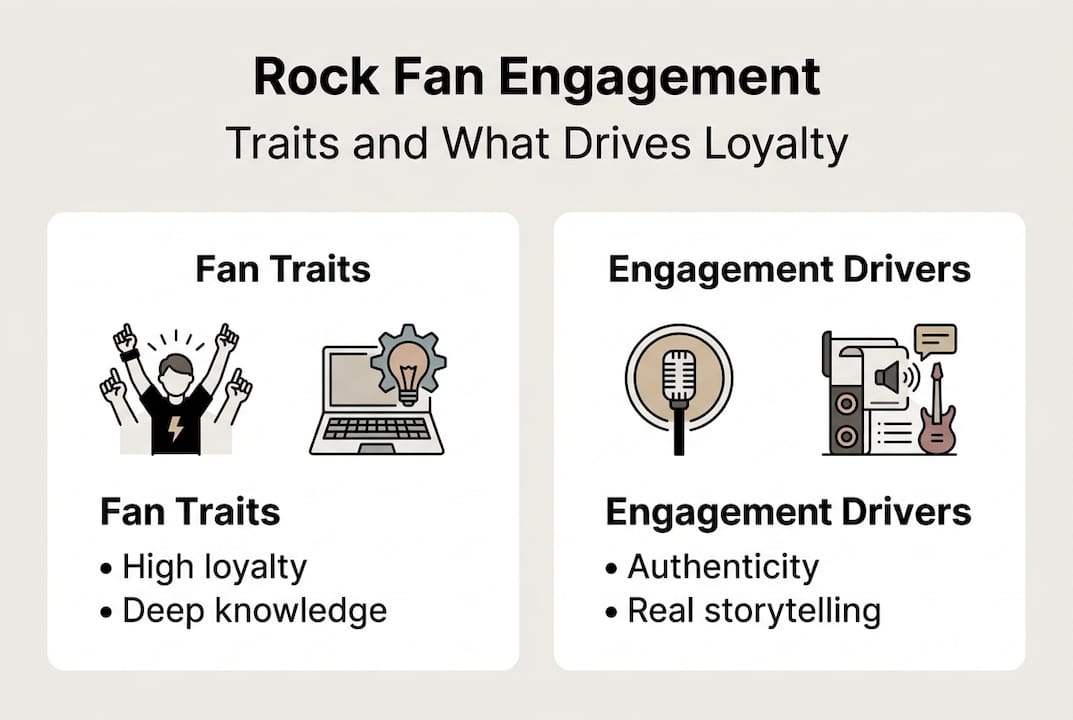
Fan trait | Why it matters | Engagement implication |
High loyalty | Fans stick around when trust is built | Focus on long-term relationships, not one-off moments |
Emotional investment | Music serves mental health functions | Prioritize emotional depth in content and storytelling |
Community orientation | Fandoms act as support networks | Build genuine community spaces, not just promotional ones |
Authenticity radar | Inauthenticity triggers backlash quickly | Be consistent, honest, and transparent in all communication |
Understanding these traits is the foundation. You can’t build real engagement without first understanding what you’re actually engaging with. The mental health impact of rock music on listeners adds another layer of responsibility for any band or brand stepping into this space.
Building emotional engagement through storytelling
With the mindset of fans understood, let’s move to storytelling as a driver of emotional engagement. Every great rock band has a story, and the fans who follow that band closely often know it better than the band members themselves. That’s because stories create the emotional thread between artist and audience. Without a story, you’re just sound. With one, you become something fans can hold onto.
We’ve seen this firsthand with Winter Agony. When Kage started talking openly about where the lyrics came from, about the specific struggles that shaped tracks like the ones we’ve been building in our reunion sessions, something shifted. Fans didn’t just listen differently. They started sharing their own stories back. That kind of exchange is what real engagement looks like.
Songwriting fuels emotion in ways that no promotional strategy can replicate. A genuine lyric about loss, about surviving something hard, about not knowing if you’re going to make it through, lands differently than anything crafted in a marketing meeting.
Here’s how to build authentic storytelling step by step:
Start with the real thing. Identify the actual experiences behind the music. Don’t sanitize them. Fans can smell a polished, comfortable version of a hard story from miles away.
Find the through-line. What’s the consistent theme across your music, your band’s history, your personal journey? Build your narrative around that.
Share the process, not just the product. Fans want to see the mixing and mastering sessions, the arguments about song direction, the late nights in the studio. Raw process content builds deeper connection than finished product reveals.
Be consistent across platforms. The story you tell on stage should match what you post online and what you say in interviews. Inconsistency fractures trust quickly.
Involve tastemakers. Fans who are deeply embedded in the scene, active on forums, Discord servers, and metal advisory communities, can amplify your narrative if they feel included in it.
Metal fans demand authenticity; inauthentic gestures lead to fast and vocal backlash. Using consistent narratives, respecting fan rituals like vinyl listening sessions, specific pre-show traditions, and involving tastemakers through forums and Discord builds the kind of social capital that protects you when you take creative risks.
Authentic approach | Inauthentic approach |
Sharing real struggles behind the music | Generic “we love our fans” messaging |
Consistent narrative across all platforms | Different story depending on the audience |
Involving fans in creative decisions | Announcing finished decisions with no input |
Respecting fan-created traditions | Commercializing fan rituals without credit |
Pro Tip: Keep a running document of your band’s key narrative moments. Major lineup changes, creative breakthroughs, personal struggles that shaped an album. Reference this regularly so your storytelling stays rooted and consistent no matter who on your team is posting or speaking publicly.
The goal isn’t perfection. The goal is honesty. Fans don’t need you to have figured everything out. They need you to be real with them about the journey.
Innovative content formats: From music videos to fan-driven platforms
Once stories are woven, it’s time to bring them to life through fresh content formats. The landscape of how fans consume content has changed dramatically, and the bands that stay connected are the ones willing to experiment while keeping their core identity intact. This isn’t about chasing trends. It’s about finding new ways to deliver the same emotional truth.
Here’s what’s working right now in the rock and metal space:
AI-assisted music videos that allow smaller bands to produce visually striking content without major label budgets. We’ve been exploring exactly this with our reunion releases, and the results genuinely surprised us.
Live streaming sessions that go beyond performance, including Q&A, gear breakdowns, and songwriting walkthroughs.
Fan-driven platforms like Discord servers and Patreon where the community shapes what content gets made.
Short-form video on platforms like YouTube Shorts and Instagram Reels, used not for promotion but for unfiltered moments from rehearsals and recording.
Interactive lyric experiences where fans can submit interpretations or contribute visual art that gets featured officially.
Authenticity is non-negotiable for metal fans, which means every innovation needs to be framed as an extension of your narrative, not a departure from it. When we started using AI tools for our video production, we didn’t hide it. We talked about why, what it meant for our creativity, and how it fit the Winter Agony vision. The community responded well because we brought them into the reasoning.
Understanding how to create impactful music videos that resonate emotionally is still one of the highest-impact tools you have. And right now, AI music video innovation is opening doors that used to require a six-figure budget.
Content format | Engagement strength | Cost level | Fan involvement potential |
Traditional music video | High visual impact | High | Low |
AI-assisted music video | High visual, low cost | Low to medium | Medium |
Live stream sessions | High authenticity | Very low | Very high |
Discord community | Deep engagement | Very low | Extremely high |
Short-form behind the scenes | Medium reach | Very low | Medium |
Pro Tip: Don’t wait until a new format is polished before sharing it with fans. The rougher, more real version of a new experiment often performs better emotionally because it shows the human behind the process. The music production role in shaping the emotional weight of a track is something fans genuinely want to understand, so show them.
Measuring impact and sustaining engagement
Having launched innovative formats, let’s examine how to measure and sustain engagement. Launching a strategy is one thing. Knowing whether it’s actually working, and adjusting before it stops working, is where most bands and brands fall short.
Here’s a step-by-step process for measuring and maintaining genuine fan engagement:
Track qualitative feedback first. Comments, direct messages, and forum discussions give you the emotional temperature of your community. A spike in algorithmic metrics means less than a genuine conversation sparked by something you shared.
Monitor consistency of engagement, not just peaks. A single viral moment is less valuable than steady, growing participation in your community spaces.
Identify the fans who show up repeatedly. These are your core community members. Are they getting more involved over time or drifting? That’s your clearest signal.
Survey your fans directly. Ask them what they want more of, what felt off recently, and what brought them to you in the first place. The answers are almost always useful and often surprising.
Review and refresh your narrative quarterly. Your story evolves. Make sure your engagement strategy evolves with it.
One thing we’ve learned is that individualized listening even in crowds is real. Some fans are at your show or on your stream to have a deeply personal, internal experience. They’re not there to socialize. Engagement doesn’t always look like interaction. Sometimes it looks like someone sitting in the back row with their eyes closed and tears running down their face. That person matters. Design experiences that honor both the communal and the solitary dimensions of fandom.

Understanding the emotion matters well-being angle of your fan relationship also helps you avoid the most common mistake: treating engagement as a numbers game. Volume of followers means very little if those followers aren’t genuinely moved by what you’re doing.
Metric | What it tells you | Limitation |
Follower count | Reach potential | Says nothing about emotional connection |
Comments and replies | Conversational engagement | Can be shallow without context |
Repeat attendance or streams | Core fan loyalty | Harder to measure but more meaningful |
Direct messages and fan mail | Deep individual connection | Small sample but highly valuable signal |
Community participation | Health of your ecosystem | Requires active community space to measure |
Pro Tip: Set aside time monthly to personally respond to fan messages, even if it’s just a handful. That direct contact is more valuable for long-term loyalty than any algorithm-optimized post. Fans remember when an artist actually wrote back.
The uncomfortable truth: What most brands miss about rock fan engagement
Here’s what we’ve seen over and over, from the outside and from the inside. Bands and brands pour money into production quality, flashy content, big announcements, and elaborate rollouts. And fans shrug. Meanwhile, a band posting an unedited rehearsal video from a garage in Kentucky gets thousands of comments from people saying “this is exactly what I needed today.”
The uncomfortable truth is that production budget is almost irrelevant to emotional connection. What moves rock and metal fans is the feeling that you’re being honest with them. That you’re not packaging yourself for mass appeal. That you chose this music and this life because you couldn’t choose anything else. When we came back together as Winter Agony, we didn’t have a polished plan. We had real stories and a genuine need to make music again. That honesty was the whole strategy, and it worked better than anything we could have manufactured.
Community input is consistently undervalued in how bands approach fan engagement. Fans know what they want. More importantly, they know what’s real. Explore the Winter Agony blog to see how we’ve been sharing that journey openly, without a filter. The lesson here is simple. Stop performing engagement and start practicing it.
Take your fan engagement further with Winter Agony
If this guide resonated with you, it’s because you already understand that real engagement isn’t a tactic. It’s a commitment to honesty, consistency, and genuine emotional exchange with the people who show up for your music.
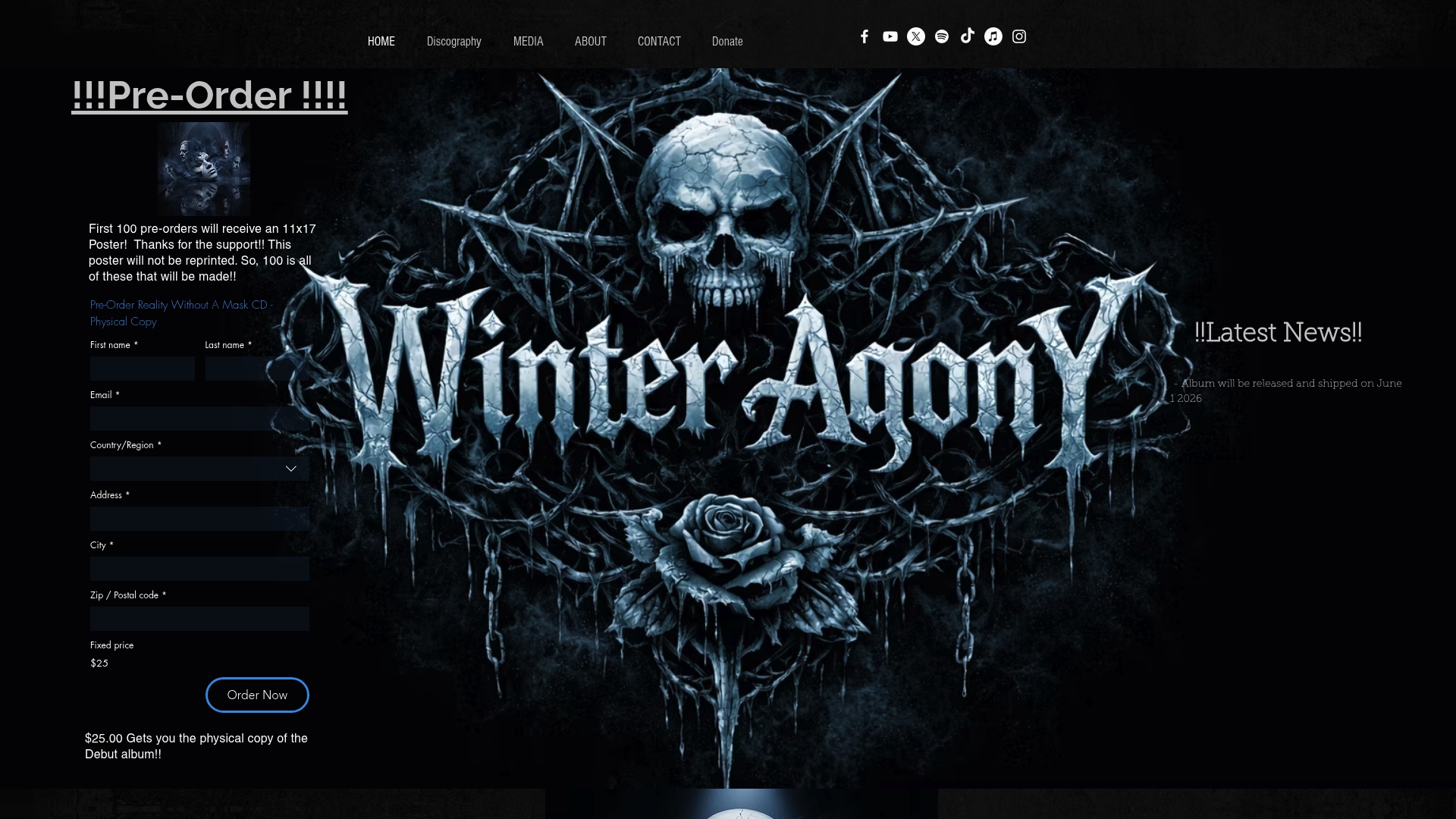
At Winter Agony, we’ve built our entire reunion around these principles. Every track we’re releasing, every AI-assisted video we’re producing, every behind-the-scenes moment we share is rooted in the same thing: giving you, the fans, something real to hold onto. Come explore our new music, join the conversation, and be part of what we’re building together. The door is open and we mean that.
Frequently asked questions
What makes rock and metal fans uniquely loyal?
Their loyalty is fueled by authentic narratives and emotional connections, backed by the most loyal fanbase on Spotify data, where 70% use music for stress relief and the community actively reduces isolation and its related risks.
How can bands avoid backlash from rock fans?
Bands should maintain consistent, authentic narratives and involve fans early in any changes, since inauthentic gestures reliably trigger fast and vocal backlash in the metal community.
What types of content best engage rock audiences?
Authentic music videos, personal storytelling, and fan-driven platforms like Discord are most effective because they create emotional resonance and genuine community rather than passive consumption.
How can engagement be maintained over time?
By regularly checking qualitative feedback, respecting that individualized listening in crowds is a real pattern, and refining strategies based on what your core fans actually tell you they need.
Recommended
Comments