


Exploring Hard Rock: Sound, History, and Emotional Power
- Travis B
- Apr 23
- 7 min read

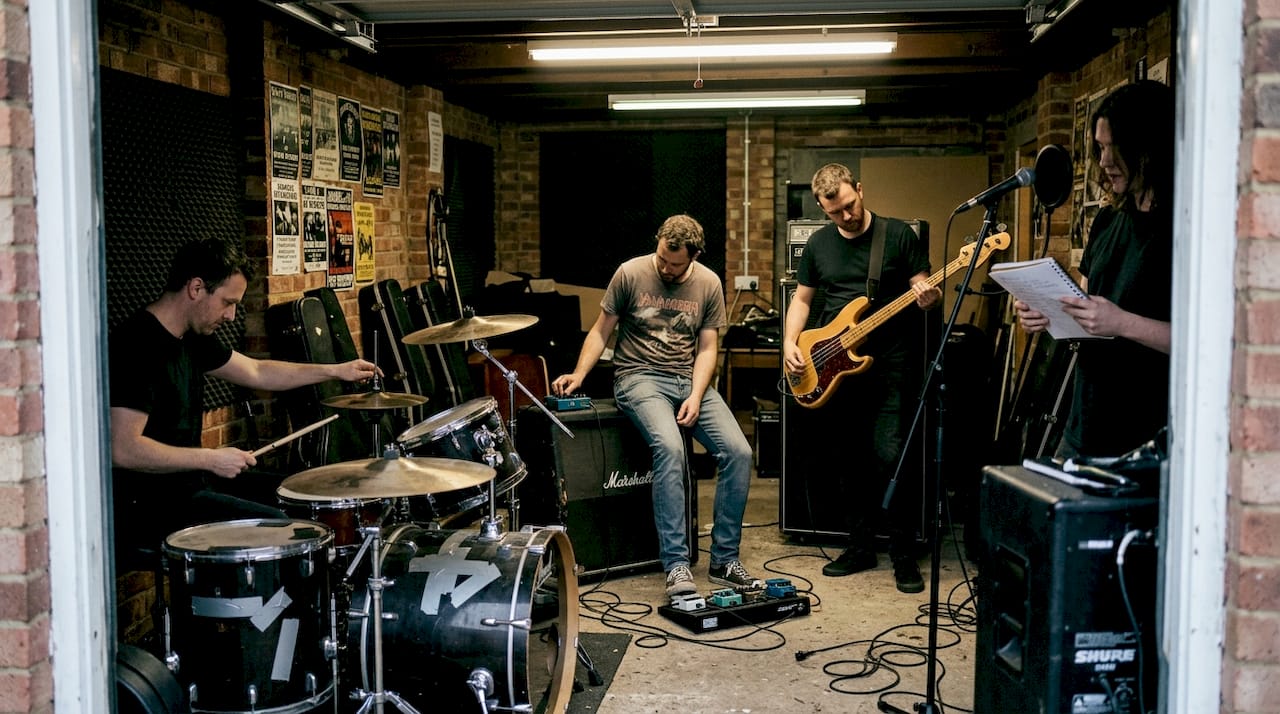
Hard rock gets misunderstood more than almost any other genre. People hear loud guitars and automatically assume it’s all heavy metal, but that comparison flattens something genuinely rich and distinct. Hard rock has its own DNA, its own emotional vocabulary, and a history that stretches back to the mid-1960s when musicians were pushing blues and rock to their breaking points. We’ve lived inside this genre for two decades, and we still find new layers in it. This article walks you through where hard rock came from, what makes it sound the way it does, why it hits so hard emotionally, and how it actually differs from metal.
Table of Contents
Key Takeaways
Point | Details |
Distinct musical origins | Hard rock grew out of mid-1960s blues and garage rock, evolving its own identity. |
Signature sound | The genre is marked by distorted guitars, powerful vocals, and energetic grooves. |
Emotional depth | Hard rock channels both aggression and vulnerability, resonating with real-life struggles. |
Compared to heavy metal | Hard rock leans more on groove and blues influence, while metal is heavier and darker. |
Understanding the origins and evolution of hard rock
Hard rock didn’t appear out of nowhere. It grew from a restless collision of sounds that musicians in the mid-1960s were actively experimenting with. Blues rock, garage rock, and psychedelic rock all fed into it, and the result was something that felt both primal and electrified. According to Wikipedia’s overview, hard rock is a subgenre of rock characterized by aggressive, distorted electric guitars, powerful vocals, driving rhythms, and an emphasis on riffs and solos, originating in the mid-1960s from those three foundational styles.
The bands that shaped this early sound each brought something specific to the table:
The Yardbirds pushed the electric guitar into new sonic territory, influencing nearly every rock guitarist who came after them.
The Rolling Stones took American blues and injected it with swagger and attitude.
Cream built their identity on blues-rooted improvisation at high volumes.
The Who brought aggression and theatrical energy to rock performance.
Led Zeppelin combined blues, folk, and heavy riffing into something that felt entirely new.
Deep Purple introduced a classically influenced approach to hard rock songwriting.
As Wikipedia notes, these key pioneers shaped a genre that reached its cultural peak in the 1970s, when hard rock became the dominant sound of arena stages worldwide.
Here’s a quick look at how the genre evolved across decades:
Era | Key development |
Mid-1960s | Blues rock and garage rock fusion begins |
Early 1970s | Arena rock explodes; riff-driven albums dominate charts |
Late 1970s | Punk crossover tension; glam rock elements emerge |
1980s | MTV era; hard rock reaches mainstream radio saturation |
1990s and beyond | Grunge shifts focus; hard rock adapts and survives |
“The blues were the seed, but the electricity was the soil. Hard rock grew from both.”
What’s remarkable is how durable this foundation has proven. Bands from different eras keep returning to those same blues rock roots because there’s something honest in them. It’s not just a musical style. It’s a way of communicating something real.
Signature sound: What makes hard rock unique
With an understanding of hard rock’s roots, we can now dissect what gives the music its unmistakable power and character. The sound is built around a core set of elements that, when combined, create something physically and emotionally engaging.
Distorted guitars anchored by power chords and memorable riffs form the backbone of hard rock. The drums deliver a strong backbeat, and the bass locks in with the rhythm to create a groove you feel in your chest. Vocals tend to be powerful and expressive, ranging from raw and gritty to soaring and melodic.

Here’s how hard rock compares in production approach between studio and live settings:
Setting | Characteristics |
Studio | Controlled overdrive, layered guitars, polished dynamics |
Live | Raw energy, louder presence, improvisational feel |
The typical hard rock song follows a structure built for impact:
Intro riff that establishes the mood immediately
Verse that sets up the story or emotional premise
Pre-chorus that builds tension
Chorus that releases the tension with maximum energy
Guitar solo that adds an expressive, often emotional peak
Outro or reprise that closes the track with purpose
Understanding music production differences between genres helps you realize why hard rock production emphasizes high volume, overdrive, and that live energy capture even in a studio setting. It’s not accidental. Producers and engineers intentionally preserve a sense of rawness because that honesty is part of the genre’s identity.
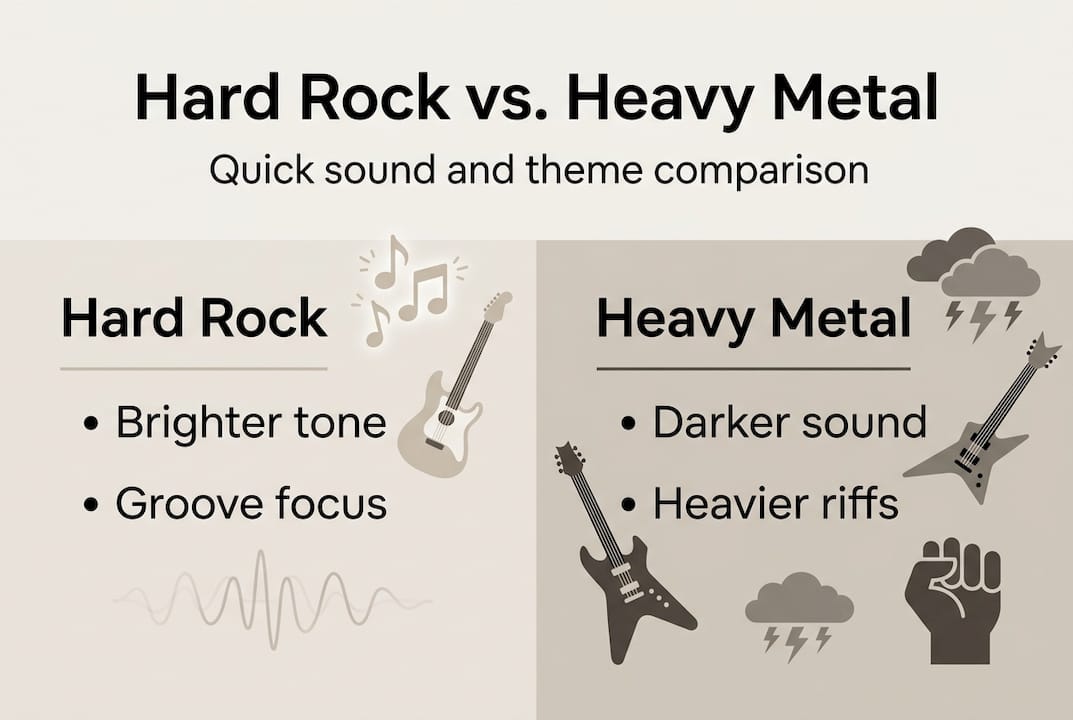
Pro Tip: When you’re listening to hard rock for the first time or the hundredth time, focus on the riff and the groove. That rhythmic heartbeat beneath the distortion is what separates hard rock from its heavier cousins. If you can nod your head to it before you even register the lyrics, that’s hard rock doing its job.
Catharsis and connection: The emotional core of hard rock
Once familiar with the sound, it’s crucial to see why hard rock resonates so deeply on an emotional level. The music was never just about volume. It was always about saying something that felt too big or too raw for ordinary conversation.
Common emotional themes in hard rock include:
Rebellion against authority, conformity, and expectations
Heartbreak and the kind of pain that demands more than a soft ballad
Defiance in the face of failure or rejection
Resilience built through personal struggle
Longing for connection, freedom, or something lost
These aren’t just lyrical topics. They’re the emotional reason fans keep returning. Hard rock gives you permission to feel big feelings loudly. Research on cathartic release in music shows that emotional depth arises from blending aggression with vulnerability, and that songs exploring betrayal, pain, and resilience, like many Guns N’ Roses tracks, provide genuine psychological release for listeners.
“Hard rock gives you a place to put the things you can’t say out loud. That’s not weakness. That’s the whole point.”
That’s something we’ve experienced firsthand as a band. Writing about personal struggles, putting them into riffs and lyrics, and then watching someone in the crowd mouth the words back at you. That connection is irreplaceable. It’s also why songwriting and emotional storytelling remain central to everything we make.
Pro Tip: If you’re going through something heavy, don’t avoid hard rock. Let it absorb some of what you’re carrying. Use the energy of the music to process emotion rather than suppress it. You’d be surprised how much a three-minute riff can move through you.
Hard rock and heavy metal: Differences, overlaps, and edge cases
With hard rock’s signature sound and emotionality clarified, it’s natural to ask: how is it different from heavy metal? The short answer is that the differences in sound and heaviness go deeper than most people expect.
Characteristic | Hard rock | Heavy metal |
Tone | Brighter, bluesier | Darker, denser |
Themes | Rebellion, fun, heartbreak | Fantasy, darkness, extremity |
Groove | Central to the sound | Less emphasized |
Tempo | Varied, often mid-paced | Often fast, sometimes slow and crushing |
Roots | Blues, garage rock | Hard rock, classical influences |
According to TV Tropes’ breakdown, hard rock is distinguished from heavy metal by less sonic density, brighter tones, bluesier riffs, and lighter thematic content, retaining more of its rock and blues roots throughout.
Edge cases make this complicated, of course. Some bands blur the line entirely:
Black Sabbath is credited as a metal founder but their early work has heavy blues roots
AC/DC is technically classified as hard rock but plays with a brutality that metal fans love
Van Halen sits comfortably in hard rock territory but their guitar work influenced countless metal players
The nuance here is important. Heaviness is perceptual, shaped by context, emotion, and what the listener brings to the experience. It’s not just about volume or speed. Hard rock prioritizes groove over extremity, and that’s a meaningful distinction even when genre lines blur. Watching how music video trends between genres differ also tells you a lot about how each community sees and presents itself visually, not just sonically.
Our take: Why hard rock matters more than ever
Having understood the facts and contrasts, here’s our honest perspective: hard rock has a unique emotional utility that neither mainstream pop nor pure metal can fully replicate. It sits in a space where power and relatability coexist, where you can feel the aggression of the guitar and the ache of the lyric at exactly the same time.
A lot of people still assume hard rock is just a stepping stone to heavier genres, or a softer version of metal. We’ve never believed that. Hard rock is its own complete language. It doesn’t need to be heavier to be valid, and it doesn’t need to be softer to be accessible.
What keeps us coming back to hard rock’s creative essence is the honesty in it. The genre was built by people saying things they actually felt, not things that were safe or commercially calculated. That spirit is still alive and it’s worth protecting. If you’re new to the genre, our best advice is simple: let go of the genre labels and just feel what the music is doing to you.
Discover more at Winter Agony
If what you’ve read here resonates with you, there’s a whole community waiting on the other side of this article.

We’ve been building the Winter Agony community around exactly this kind of depth, honest conversation about music, emotion, personal stories, and what hard rock really means to people who’ve lived inside it. Whether you’re a longtime fan or someone just discovering the genre, there’s room for you here. Explore our music insights and stories for articles that go beyond the surface and into the real heart of hard rock and heavy metal. Come find out what the music is really saying.
Frequently asked questions
What distinguishes hard rock from heavy metal?
Hard rock features bluesier riffs and brighter tones, prioritizing groove and relatability, while heavy metal leans darker, denser, and faster. The two genres share roots but part ways in tone and intent.
What are some classic hard rock bands?
Key hard rock pioneers include Led Zeppelin, Deep Purple, The Who, Rolling Stones, and Cream, all of whom helped define the genre’s sound during its formative years in the late 1960s and 1970s.
Why does hard rock music feel emotionally powerful?
Hard rock blends aggression with vulnerability, creating space for cathartic release and genuine personal connection. The music gives emotion a volume and a rhythm that makes it easier to process.
Is heaviness in hard rock about volume?
Heaviness is perceptual, shaped more by groove, emotional context, and listener expectations than by sheer volume or speed. Hard rock can hit harder emotionally than louder genres because the feeling is built into the structure.
Recommended
Comments