


How technology drives creativity in hard rock and metal
- Travis B
- 5 days ago
- 10 min read

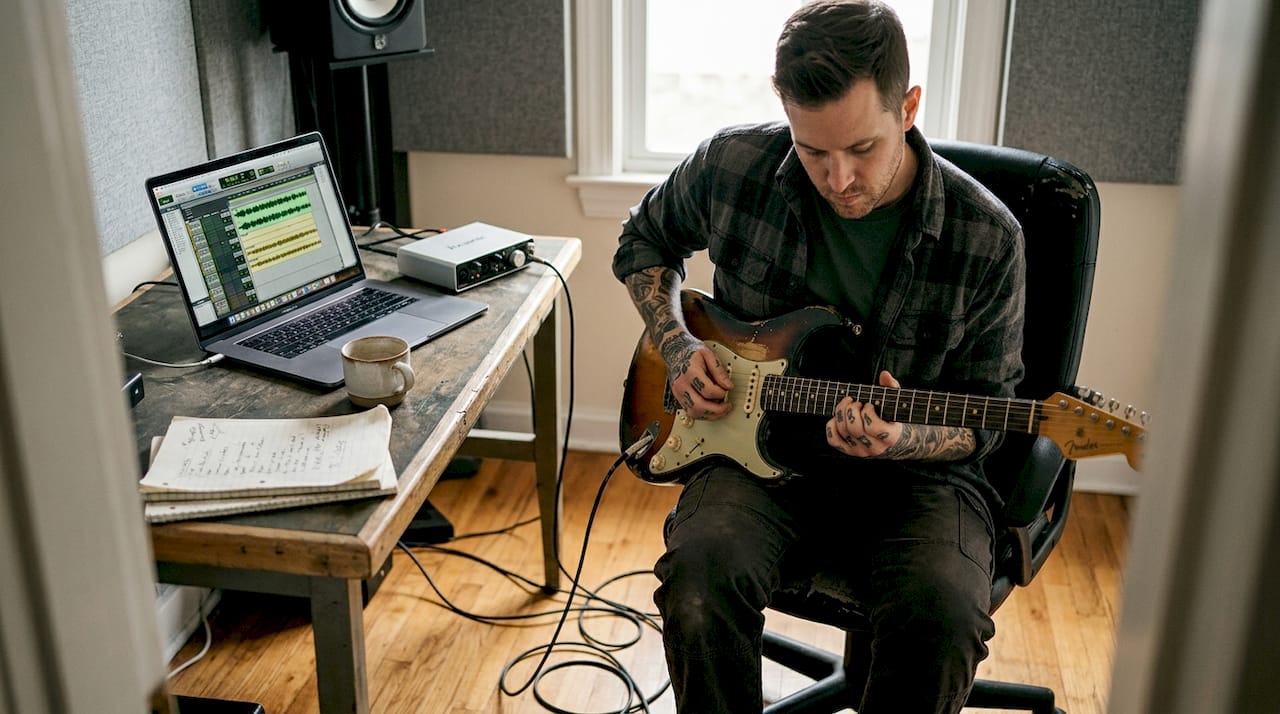
There’s a stubborn belief floating around the heavy music community that technology is the enemy of raw, honest expression. That once you swap out tape machines for DAW consoles or start letting AI touch your mix, you’ve sold something sacred. We get it. We grew up in that mindset too. But after two decades of making heavy music from the heart of Kentucky, and now diving head first into AI-assisted production for our reunion material, we can tell you straight: that belief is outdated, and the evidence is stacking up fast.
Table of Contents
Key Takeaways
Point | Details |
Tech amplifies creativity | Digital tools and AI empower hard rock and metal artists to push expressive boundaries. |
AI boosts emotional depth | AI platforms enhance creativity by supporting emotional intelligence and self-efficacy. |
Risks require balance | Homogenization is a real risk, so artists need to combine tech with personal experimentation. |
Practical strategies matter | Applying actionable frameworks ensures that technology supports, not replaces, authentic expression. |
Human touch remains vital | For heavy music, unique emotion and musicianship can’t be fully replicated by algorithms. |
How technology reshaped hard rock and metal production
Building on the introduction’s challenge to old assumptions, let’s examine how major production technologies shaped modern hard rock and metal.
When we first started recording back in 2005, analog tape was still the gold standard in a lot of circles. There was something beautiful about it, warm and imperfect in the best way. But it was also expensive, time consuming, and unforgiving. One bad take could cost you a real chunk of your session budget. The shift toward digital audio workstations (DAWs, which are software platforms used to record, edit, and mix music) changed everything. Suddenly a band from rural Kentucky could build a studio in a spare room and produce tracks that rivaled what bigger acts were doing with professional budgets.
And it wasn’t just about affordability. The music video evolution happened in parallel, with visual storytelling becoming just as important as the audio itself. Technology opened both doors simultaneously.
Key technology advances that reshaped rock and metal production include:
Drum triggering and sample replacement, which gave engineers control over live drum sounds without losing the feel of a human performance
Amp modeling software like Neural DSP and Kemper, which replicate the tone of expensive tube amplifiers at a fraction of the cost
Digital effects chains that replaced walls of rack gear with a single plugin chain in your DAW
Cloud-based collaboration tools that let bandmates track parts from different cities or countries
Automated mixing and mastering platforms that speed up post-production significantly
Virtual instrument libraries that add orchestral, atmospheric, or industrial textures to heavy compositions
Here’s a simplified timeline of the technology breakthroughs that hit hardest for heavy music:
Year range | Technology milestone | Impact on heavy music |
Early 1990s | Digital recording (Pro Tools) | Cleaner editing, non-destructive takes |
Late 1990s | DAW software goes mainstream | Home studios become viable |
Early 2000s | Amp simulation plugins | Affordable pro guitar tones |
Mid 2000s | Drum triggering software | Consistent live and studio drums |
2010s | Cloud collaboration tools | Remote band recording becomes normal |
Early 2020s | AI-assisted production tools | Creative assistance and automation |
2026 | AI video and vocal tools | Full creative pipeline integration |
Research confirms that this kind of tech integration actually pushes creativity forward. AI use positively impacts musical creativity through mediators like self-efficacy (your belief in your own ability to create) and emotional intelligence, with an empirical study demonstrating a chain mediation effect between these factors.
The role of production in hard rock has always been about serving the song, and technology just gives you more ways to do that honestly and effectively.
Pro Tip: Don’t abandon analog entirely. Running a guitar through a real tube amp and then blending that tone with a modeled signal gives you a depth and character that’s hard to fake purely in the box. The combination is often more interesting than either source alone.
AI’s emerging role in musical creativity and performance
With technology’s impact mapped out, let’s explore how artificial intelligence is changing both the creative and performance dimensions for rock and metal artists.
AI in music isn’t some distant sci-fi concept anymore. It’s real, it’s here, and bands are using it right now to do things that would have seemed impossible five years ago. Riff generation tools can suggest chord progressions and melodic ideas based on your input. Lyric assistance platforms analyze theme, tone, and mood to help you push past writer’s block. Vocal pitch correction and enhancement tools have evolved so far beyond basic Auto-Tune that they can actually help a vocalist find the exact emotional texture a song needs.
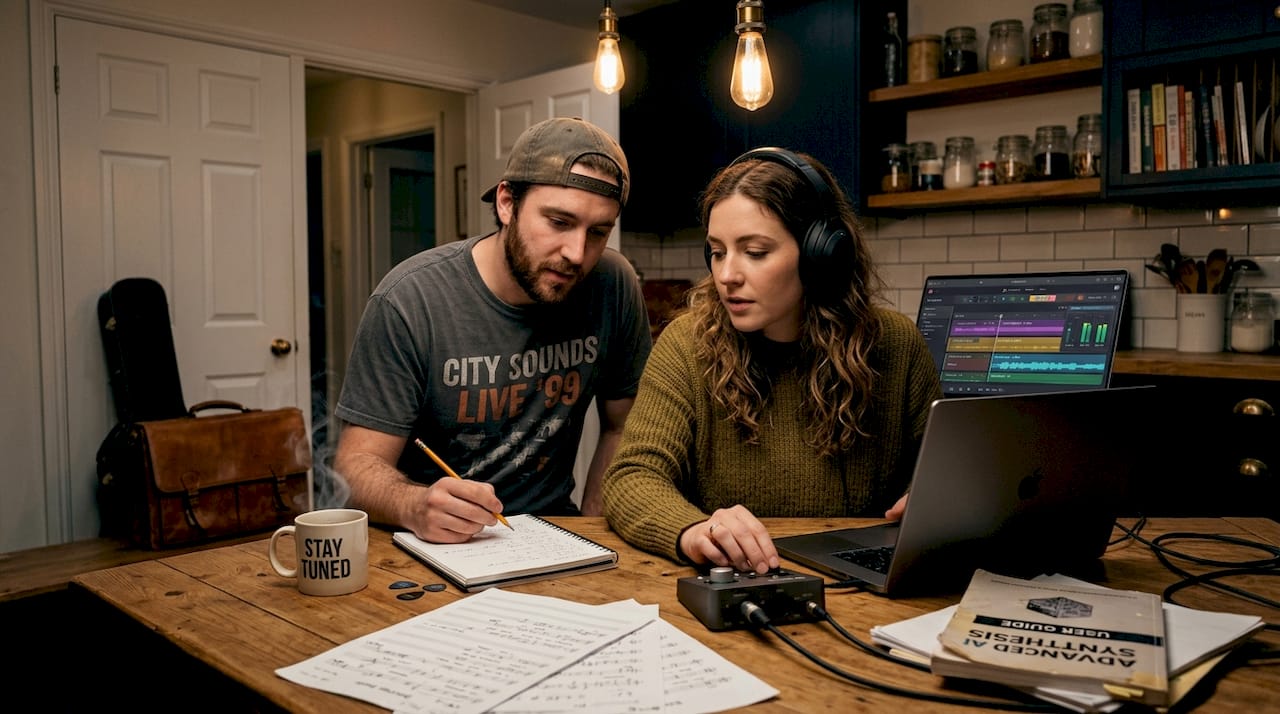
The AI video creation space has exploded too, with tools that let artists generate visuals tied directly to the emotional arc of a track.
Here’s an honest comparison of human versus AI-driven music creation:
Dimension | Human creation | AI-assisted creation |
Emotional depth | High, rooted in lived experience | Dependent on human input and direction |
Speed of ideation | Variable, can be slow | Fast, generates options quickly |
Originality | Unique, personal voice | Risk of pattern repetition without guidance |
Technical execution | Limited by skill level | Can assist with advanced production tasks |
Adaptability | Responds to emotion and instinct | Responds to data and prompts |
Copyright ownership | Clear and established | Still legally ambiguous in 2026 |
Practical ways artists are integrating AI today include:
Using AI riff and melody generators as starting points to spark ideas, then reshaping them completely with personal style
Letting AI handle first-pass vocal tuning and timing correction so vocalists can focus on performance rather than technical fixes
Generating AI visual concepts for music videos and then directing human editors to refine them
Applying AI mastering tools for quick reference mixes during the writing phase
Using AI lyric generators to break through creative blocks, then rewriting heavily for authenticity
The songwriting with AI conversation is nuanced and worth taking seriously. The same research that confirms AI’s positive creativity impact also highlights that emotional intelligence is a key mediator, meaning how emotionally self-aware you are directly shapes how well AI tools serve your creative goals.
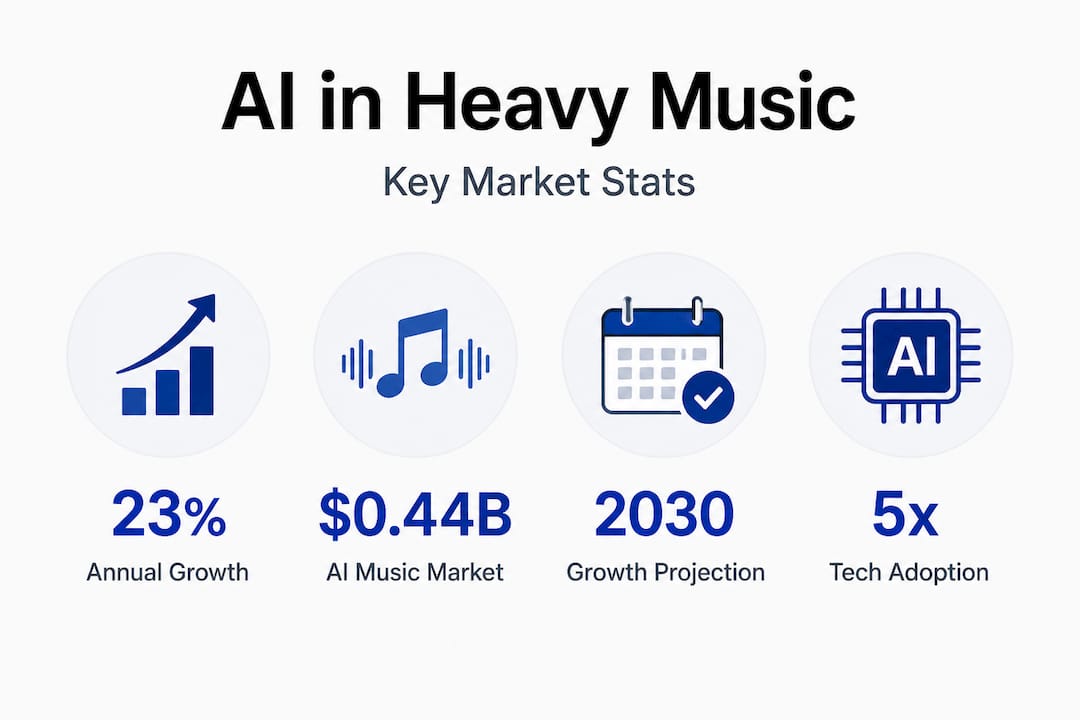
The AI music market was valued at $0.44 billion recently, with a 23% compound annual growth rate projected through 2030. That’s a massive signal that this technology isn’t going anywhere. The question for heavy music artists is how to ride that wave without losing what makes your music yours.
Risks, rewards, and the fight against musical homogenization
Knowing how AI powers new creativity, we must also consider the risks and how they’re being managed by savvy artists.
Here’s the honest part of the conversation that a lot of tech-positive articles skip over. AI does carry real risks for musicians, especially for a genre built on individuality and rawness. The biggest one is homogenization. When thousands of artists all run their ideas through the same AI tools trained on the same datasets, the output starts to sound similar. That’s a genuine threat to what makes heavy music great.
Common pitfalls artists face when using AI technology include:
Accepting AI-generated ideas without significantly modifying them, resulting in generic output
Using automated mixing and mastering settings without customizing them to your specific sonic identity
Relying on AI lyric prompts without injecting personal experience and emotional honesty
Letting AI video generation replace rather than support your visual creative direction
Ignoring copyright ambiguity around AI-generated content and risking legal complications
“AI risks homogenizing music by pulling from existing patterns, meaning the more artists lean on it without critical input, the more heavy music could lose the jagged edges and personal scars that define it.” Source: AI in the music industry
The copyright situation is genuinely murky right now. AI-generated content doesn’t carry the same authorship protections as human-created work, which is a serious consideration if you’re planning to release and monetize music that heavily relies on AI generation without significant human creative input.
Understanding AI in music video production and how to direct it purposefully is part of the answer. The artists who use AI most effectively treat it the way a good director treats a film crew. You’re making the creative calls. AI is executing and offering options, not deciding the artistic vision for you.
The best emotional music video ideas still come from human experience. AI can help you realize those ideas faster and with more visual complexity, but the emotional core has to start with you.
Pro Tip: Use AI as a brainstorming partner, not an author. Generate five AI riff ideas, throw four away, take the one that sparks something real, and then mutate it until it sounds like nobody else on earth. That’s how you keep the tools working for you instead of the other way around.
Practical strategies: Applying tech and AI for maximal expression
After dissecting technology’s risks and rewards, let’s move to concrete steps you can take to apply these tools while keeping your sound original.
Knowing the risks doesn’t mean retreating from the technology. It means going in with a clear strategy and a strong sense of who you are as an artist before you open a single AI plugin. The research on self-efficacy is relevant here. AI creativity research shows that artists with stronger belief in their own creative abilities actually use AI more effectively and produce more original work with it. So building your own musical identity isn’t just an artistic goal. It’s a strategic advantage.
Here’s a step-by-step approach to integrating AI without losing your personal voice:
Anchor yourself in your own catalog first. Before touching AI tools, spend time with your existing recordings and identify what makes your sound recognizable. The more clearly you know your voice, the harder it is for AI to dilute it.
Use AI in idea generation mode only, initially. Limit AI to the brainstorming phase. Generate options, evaluate them critically, and discard what doesn’t feel authentic to your band’s identity.
Layer human performance over AI-generated foundations. If an AI tool generates a drum pattern or chord progression you like, record real instruments over it immediately. The human touch will always add irregularity and emotion that algorithms can’t replicate.
Apply AI mastering tools as reference only. Use automated mastering platforms like LANDR or iZotope to get a quick reference mix, but finish the actual master with human ears and judgment.
Document your creative process. Keep notes on what AI contributed versus what you created from scratch. This protects your copyright position and helps you stay honest about authorship.
Revisit analog tools regularly. Schedule sessions specifically for analog recording, whether that means tracking a guitar through a real amp or experimenting with hardware effects. Keeping that physical relationship with sound alive prevents your music from going sterile.
Seek community feedback early. Share rough mixes with trusted listeners who know your music. If they start saying things sound generic or different in a bad way, that’s your signal to recalibrate.
For ongoing guidance and stories from inside the process, the AI music insights blog is a good place to keep learning alongside artists who are figuring this out in real time.
Strategies for impactful music video creation follow a similar logic. Storyboard your vision before you open any AI generation tool. Know what emotional story you’re telling. Then use AI to help execute it with speed and visual depth, rather than letting the tool dictate what the story is.
Pro Tip: Schedule one “no-AI” writing session per month where the only tools allowed are your instruments and maybe a simple four-track recorder. It keeps your instincts sharp and reminds you what your raw creative voice sounds like without any digital assistance.
Our take: What most guides don’t tell you about tech in heavy music
With actionable advice laid out, here’s a deeper, honest perspective from inside the world of heavy music production.
Most articles about AI and music either go full cheerleader or full doom-and-gloom. Neither of those serves you well. The reality we’ve lived through, from bedroom four-tracks in 2005 to AI-assisted video production in 2026, is messier and more interesting than either extreme.
The conventional wisdom used to be that more production equals less authenticity. That if you couldn’t hear the room or feel the tape hiss, the music wasn’t real. We believed that for years and pushed back against digital tools longer than we probably should have. What changed our minds wasn’t a product or a trend. It was hearing what we could say emotionally through tools we’d been afraid of.
Here’s what we know from actually doing this: the greatest heavy music has always come from blending technology with human emotion, not from rejecting one in favor of the other. Black Sabbath used studio technology creatively. Pantera’s production was technically innovative for its time. Meshuggah uses digital precision alongside brutal human performance. The artists who resist technology entirely are often making music that only speaks to a shrinking audience of purists.
“Technology doesn’t take the pain out of the music. It gives you more ways to put the pain in.” This is something Kage has said repeatedly in our writing sessions, and it’s the truest thing we know about this subject.
The warning we’d add, from genuine experience, is about over-relying on AI formulas. When you start trusting the algorithm to tell you what a verse should feel like, you’re in trouble. The emotional power in songwriting comes from your life, your losses, your specific human experience. AI can help you communicate that more effectively or more visually or more technically. It cannot generate it from nothing.
Use the tools. Push them hard. But stay the author of your own story.
Explore more on technology and music with Winter Agony
We’ve been open about our own journey with technology because we believe transparency builds community, and this community of hard rock and metal fans deserves honest conversations about where the music is going.

At Winter Agony, we’re continuously sharing what we learn as we apply AI technology to our reunion tracks, music videos, and live performance tools. From Kentucky basements to cutting-edge AI production pipelines, every step of that road is documented and shared because we believe other artists and fans deserve to see how it actually works, not just the polished final product. Explore our site for in-depth guides, real artist stories, and ongoing updates about our new material. We’re building something here together, and you’re part of it.
Frequently asked questions
How does AI impact artistic expression in hard rock and metal music?
AI boosts creativity by strengthening self-efficacy and emotional intelligence in artists, and empirical research confirms a direct chain mediation effect between AI use and improved musical creativity.
What is the biggest risk of using AI in music production?
Homogenization is the leading danger, since AI generates music based on existing data patterns, and the AI music market’s rapid growth carries significant risks of flattening artistic uniqueness alongside its financial opportunity.
Can AI replace musicians or producers in hard rock and metal?
No. AI can assist with technical tasks and idea generation, but human creativity research confirms that emotional nuance and lived experience remain irreplaceable components of meaningful heavy music.
What practical tools exist for integrating AI in heavy music creation?
AI-powered plugins like iZotope Ozone, songwriting assistants like ChatGPT and AIVA, and automated mastering platforms like LANDR are all actively used in current hard rock and metal production workflows.
How can artists avoid creative homogenization with AI tools?
Maintaining a strong personal creative identity before engaging AI tools is essential, and managing AI music risks means treating AI as a collaborating tool rather than an independent creative authority.
Recommended
Comments