


Why music videos still matter for rock and metal fans
- Travis B
- May 6
- 9 min read

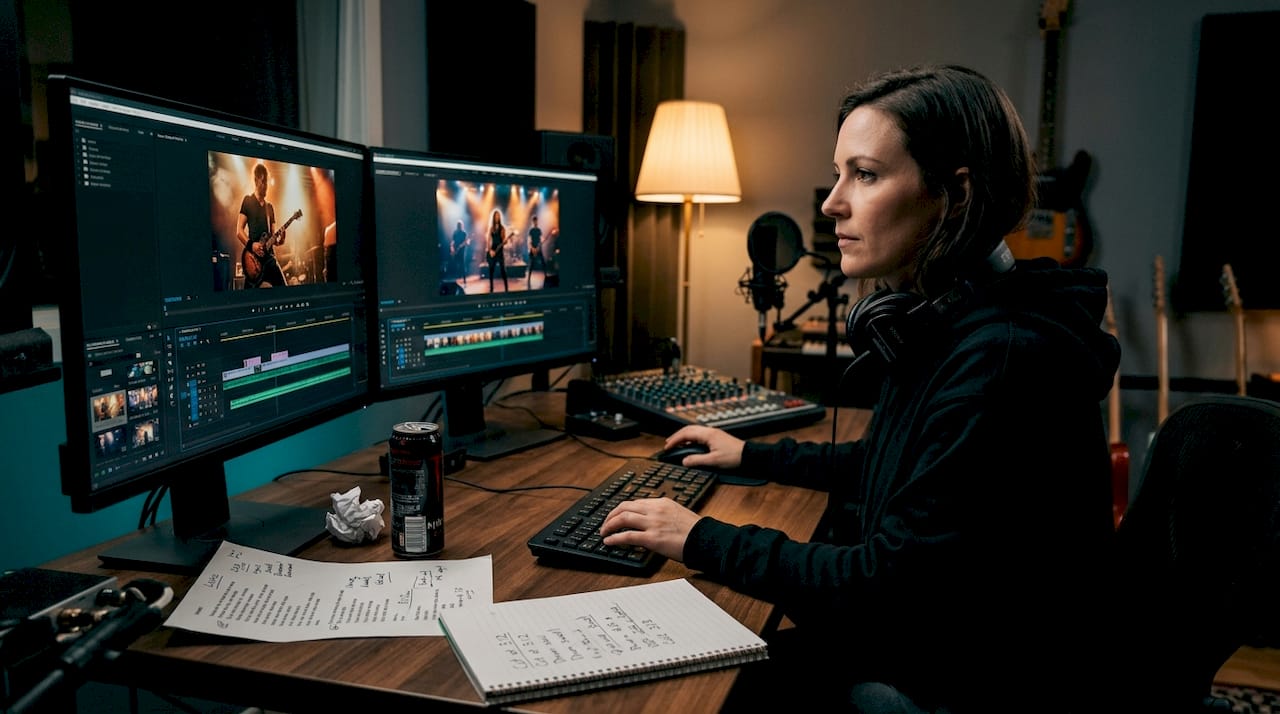
Music videos have always meant something deeper to rock and metal fans than a promotional clip. They are documents of identity, rebellion, and raw emotion. Some people claim that TikTok and short-form content have made the full-length music video obsolete, but that argument falls apart when you look at how hard rock and heavy metal communities actually engage with visual art. Rap videos alone drive 35% more engagement than other genres, which tells you the format is anything but dead. For a genre built on storytelling and emotional weight, the music video is still one of the most powerful tools in the arsenal.
Table of Contents
Key Takeaways
Point | Details |
Music videos boost fan connection | Visual storytelling deepens emotional bonds between artists and their audience. |
Short-form content challenges engagement | Platforms like TikTok impact attention but can’t replace full-length music videos’ artistic power. |
Rock and metal videos define genre identity | Iconic videos have shaped and reinforced the community and culture of heavy music. |
Technology fuels creative evolution | AI and new tools help artists innovate and sustain music video relevance. |
How music videos shaped the culture of rock and metal
To understand why music videos matter right now, you have to look back at where they came from and what they actually did for our genre. The evolution of music videos in hard rock and heavy metal was not just about getting airplay on MTV. It was about building a visual language that fans could recognize, share, and feel a part of. When Metallica dropped “One” in 1989, intercut with footage from the film Johnny Got His Gun, it did something no radio single could accomplish. It made the horror of war visceral and undeniable. Fans did not just listen to that song. They experienced it.
Music videos were historically essential to genre and artist branding, providing immersive narratives and visuals that defined fan culture for decades. Iron Maiden brought Eddie to life on screen in ways that expanded their mythology far beyond album covers. Pantera’s raw, unflinching videos matched the aggression of their music and told you exactly who they were before you heard a single note. These were not just marketing tools. They were statements.
Here is what music videos consistently delivered to the rock and metal community:
A shared visual identity that unified fans across different cities and countries
A way to communicate a band’s ethos, personality, and world view without explanation
Storytelling that extended the emotional reach of a song well beyond its runtime
A platform for artistic risk-taking that radio would never allow
Cultural artifacts that fans could revisit and find new meaning in over time
“Music videos gave rock and metal fans a world to live inside, not just a song to hear. That visual identity became as important as the music itself for generations of dedicated followers.”
The impact on rock music eras is hard to overstate. Think about the early 2000s nu-metal movement and how bands like Linkin Park used videos to connect visually charged, emotionally raw imagery directly to the anxieties of a generation. Fans who felt misunderstood in their own lives saw themselves in those visuals. That is a bond that a 15-second clip simply cannot replicate.
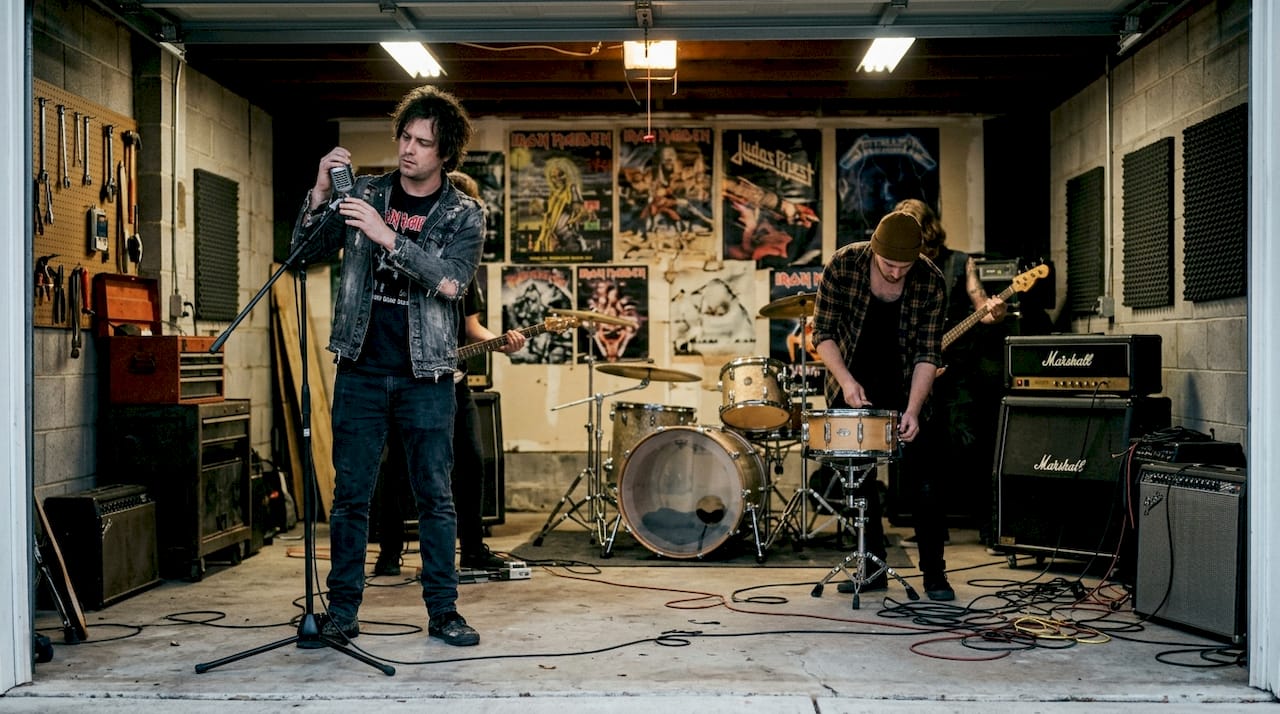
Music videos vs. short-form content: Evolving fan engagement
Let’s be real about the pressures that artists and fans face right now. Short-form content may reduce quality and attention span, but music videos persist through new platforms like YouTube and ongoing AI innovations. The conversation is not really about short-form content killing the music video. It is about how the two formats serve completely different purposes, and smart artists are starting to figure that out.
Here is a clear breakdown of how these formats compare for rock and metal fans:
Feature | Full-length music video | Short-form clip (TikTok/Reels) |
Storytelling depth | High, narrative-driven | Low, highlight only |
Fan emotional investment | Deep, immersive | Surface-level, reactive |
Production quality | Cinematic, detailed | Raw, spontaneous |
Replay value | High, fans return for details | Low to medium |
Genre identity building | Strong, visual language set | Minimal |
Algorithm reach | Moderate to high on YouTube | Very high initially |
Fan community building | Strong, shared cultural moment | Trend-driven, fleeting |
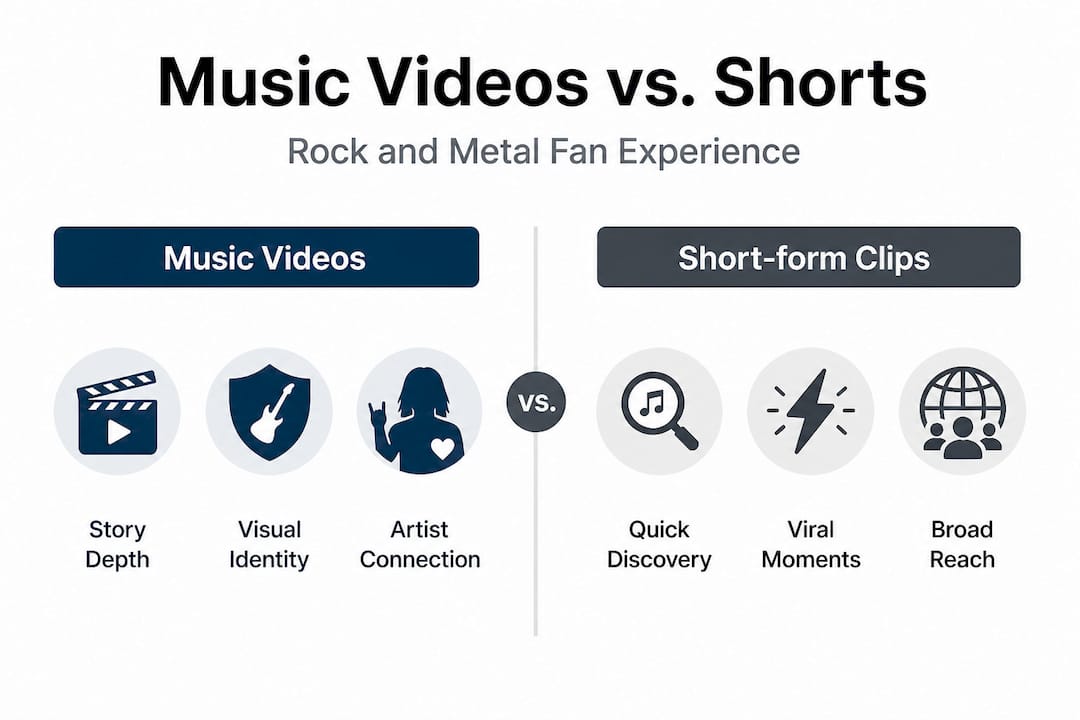
Short-form clips are great for discovery. A riff snippet or a behind-the-scenes moment can pull someone into your world for the first time. But once they are in your world, they need something bigger to stay. That is exactly where music video platforms like YouTube keep doing the heavy lifting for rock and metal.
The rap genre’s engagement numbers tell an important story. If visually driven content pulls that much weight for one genre, imagine what deliberately crafted, story-forward videos can do for a genre where emotional and thematic complexity is literally the selling point. Rock and metal have the content. The challenge is executing the visual side with enough intention to match it.
Pro Tip: Release a short teaser clip on TikTok or Instagram Reels showing 20 to 30 seconds of your most visually intense scene, then direct fans to YouTube for the full experience. This approach blends both formats without sacrificing artistic depth, and it gives fans a reason to actively seek out the complete video rather than passively scroll past it.
We’ve been working on exactly this kind of strategy ourselves, leveraging AI-driven music video tips to maximize the reach of our visuals while keeping the emotional core of each video completely intact. The technology makes both goals achievable at the same time.
Emotional storytelling: Why music videos resonate deeply
Here is the truth about heavy music. The songs deal with things that are hard to talk about. Grief, rage, isolation, survival. When a music video puts those feelings on screen, it does something incredibly powerful. It tells the fan that they are not alone in feeling what they feel. Music videos allow artists to craft immersive narratives that deepen emotional bonds with fans, and in heavy music, that bond is often the entire point.
Think about how a well-made metal video builds emotional impact step by step. Here is the sequence that consistently works:
Opening visual hook sets the emotional tone immediately, often through color, lighting, and setting before a single lyric hits
Lyrical alignment ensures the imagery on screen directly reinforces what the singer is expressing, creating a unified emotional message
Tension and release mirror the musical dynamics of the song, building intensity during verses and exploding during chorus moments
Personal narrative elements show real or dramatized human struggle that the fan recognizes from their own experience
Resolution or ambiguity at the end leaves the viewer with a feeling to sit with, whether closure, defiance, or unresolved emotion
This process is not accidental. The best emotional music video ideas for heavy music are built around intentional emotional architecture, not just cool visuals slapped onto a track. Bands like Tool, Alice in Chains, and more recently Code Orange have all demonstrated that when the visual and sonic storytelling align perfectly, the result is something fans carry with them for years.
We have always approached our own videos this way. When Kage writes a vocal performance, there is a real experience behind every line. Translating that to the visual medium means creating impactful videos that honor the source material rather than just decorating it. That distinction matters enormously to fans who are paying close attention.
Pro Tip: When planning your video, write down the single dominant emotion you want the viewer to feel at the end. Every visual decision, from wardrobe to camera movement to color grade, should serve that one emotional goal. Clarity of intent is what separates memorable videos from forgettable ones.
The fan response to authentic emotional storytelling is also fundamentally different from the response to polished but hollow production. Engaging rock fans through genuine vulnerability creates loyalty that algorithm-chasing never can. Fans who feel genuinely seen by a video become advocates, not just viewers.
Creativity and future trends: AI, production, and artistry
The tools available to independent artists in 2026 are genuinely extraordinary, and the music video format persists via YouTube and AI with new creative tools and continued fan engagement across all platforms. For rock and metal artists who have historically operated with limited budgets, AI is not a threat to authenticity. It is an equalizer.
Here is a look at the creative tools and platforms shaping music video production right now:
Tool/Platform | Primary use | Engagement potential | Accessibility |
Runway ML | AI video generation and editing | High for experimental visuals | Moderate cost |
Sora (OpenAI) | Text-to-video generation | High for cinematic sequences | Moderate cost |
YouTube | Full-length video hosting | Very high for dedicated fans | Free |
Adobe Premiere + AI tools | Professional editing with AI assist | High, industry standard | Subscription |
CapCut Pro | Short-form and teaser creation | High for social reach | Low cost |
Stable Diffusion | AI-generated still and motion art | High for unique visual styles | Free to moderate |
The key trends we are watching and actively participating in include:
AI-assisted visual storytelling that maintains artistic intent without requiring a full film crew
Fan collaboration on video concepts, allowing communities to shape the final product
Hybrid live/animated visuals that blend performance footage with generated imagery
Extended universe storytelling across multiple videos in a connected narrative
Accessibility improvements allowing smaller bands to produce cinematic quality work on indie budgets
We have been exploring AI video production tips extensively since our reunion, and the results have been genuinely exciting. What used to require a significant budget and a full production team can now be achieved with creative vision and the right tools. This does not mean every video should look AI-generated. It means AI expands what is possible for artists who are willing to learn it.
Innovative music video techniques in the rock and metal space are pushing visual storytelling into territory that was not accessible five years ago. For fans, this means richer, more complex visuals that match the sonic ambition of the music. For artists, it means freedom. And if you want to build something yourself, a solid step-by-step creation guide can get you from concept to finished video without getting lost in the technical weeds.
Why music videos still matter: Our hard-won lessons
Here is something the conventional wisdom gets completely wrong. People assume that because attention spans are shrinking, long-form visual content is losing. But that assumption confuses platform behavior with genuine fan preference. When someone loves a band deeply, they will watch a seven-minute video multiple times. They will pause it, rewind it, screenshot frames from it, and discuss details in fan forums. That is not the behavior of someone with a short attention span. That is the behavior of someone who is deeply invested.
What short-form content actually revealed is that there is a discovery layer and a depth layer to fandom. TikTok lives in the discovery layer. Music videos live in the depth layer. Both have value. But for rock and metal fans specifically, the depth layer is where the real community lives. These are fans who read lyrics printed inside album sleeves, who memorize riff patterns, who follow artists for decades through lineup changes and personal struggles. They are not going anywhere, and they absolutely want the full visual experience.
We learned this the hard way through our own journey. When we started exploring what our reunion would look and sound like, we realized that our fans were not asking for bite-sized content. They were asking for the full story. They wanted to know where we had been, what we had been through, and what the music meant to us now. A 30-second clip cannot carry that weight. But a video that is built with intention and honesty absolutely can.
The bands that thrive in this environment are the ones who refuse to abandon their artistic identity in chasing platform trends. Authenticity is not just a marketing word. It is the actual product. Our fans can tell the difference between a video made with real conviction and one made to satisfy an algorithm, and they reward the former with lasting loyalty. You can read more about how we navigate all of this on the Winter Agony blog.
Discover cutting-edge resources for music video fans
If this article sparked something in you, whether you are a fan who wants to understand the art form better or an artist looking to push your own visual work further, we have built a space specifically for this community.
At Winter Agony, we share everything we are learning about creating music videos that actually mean something, including the AI tools we use, the creative decisions we wrestle with, and the stories behind our visuals. Our resources include detailed guidance on AI tips for music videos that any artist can apply regardless of budget. Whether you are a fan who wants to go deeper or a creator ready to build something real, this is the place to do it. Come be part of the conversation.
Frequently asked questions
Are music videos still important for rock and metal bands in 2026?
Yes, music videos remain vital for expressing artistic vision and connecting with fans, and the format persists through YouTube and AI with strong engagement despite short-form competition.
How do music videos enhance emotional connection in heavy music?
Music videos let bands visually amplify emotional themes, and artists craft immersive narratives that help fans experience the music on a deeper, more personal level.
Why are TikTok and short-form content seen as a threat to music videos?
Short-form content can reduce attention span and production quality expectations, but music videos continue to adapt and thrive through new technology and platform diversity.
Can AI help artists create stronger music videos?
Absolutely. AI provides creative tools that give independent artists access to cinematic possibilities, and the music video format benefits directly from these innovations in both production quality and fan engagement.
Recommended
Comments